 Private specialist outpatient clinic
Clinic in Gniezno: heat recovery ventilation with cooling
- Noise in consulting rooms
- 31-34 dB(A) in spot checks, design target about 30-35 dB(A)
- Waiting room temperature in the July heat
- 24-25°C with 33°C outside
Distribution company, owner-occupied warehouse
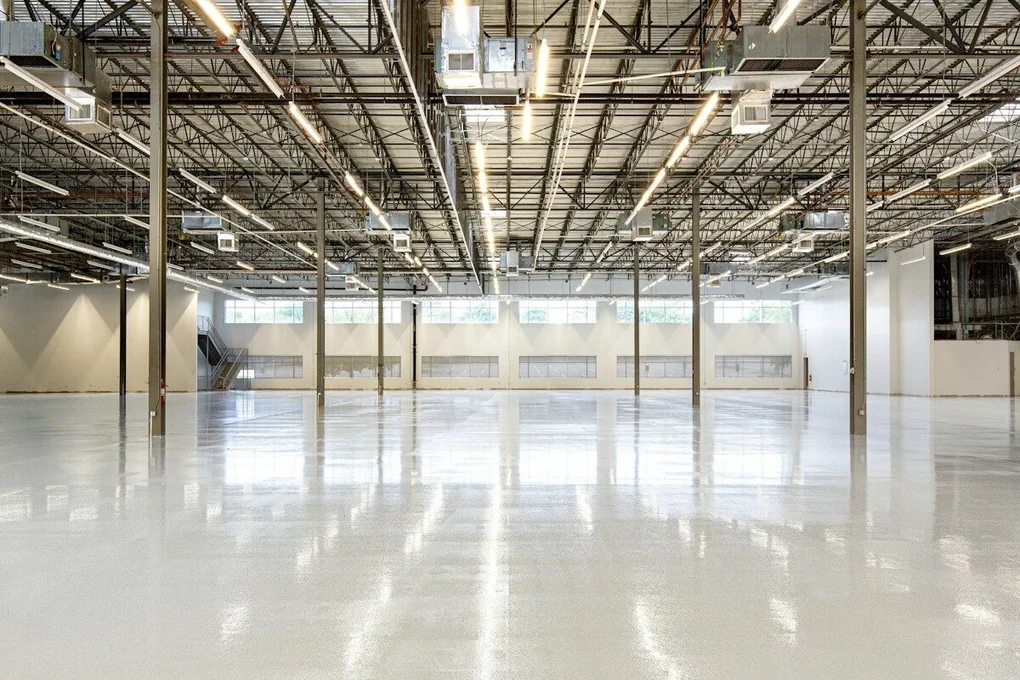
A 1990s steel warehouse, 2,600 m². We replaced gas radiant heaters with air-to-air heat pumps and destratification fans, fitted in four phases while the warehouse kept running.
Results
Building
Steel-frame warehouse with sandwich panel cladding and a masonry office section
The Września warehouse was built in 1996: steel frame, sandwich panel walls and roof, about 8 m high, with high-bay racking over most of the floor. It was heated by gas radiant heaters hung under the roof. The warehouse runs two shifts, six days a week.
The client had two problems. The first was gas costs, which stopped being predictable after 2022. The second was less obvious. Radiant heaters warm the surfaces they can "see". The tall racking cast shadows, and in winter some aisles sat at 10-11°C while the packing area under the heaters was at 17°C. Pickers working the aisles were cold.
We proposed warm air heating from air-to-air heat pumps. In a building held at 15-17°C, a heat pump runs at a low output temperature and works efficiently. Warm air also gets in between the racks, which a radiant heater can't do.
Warm air heating has its own drawback: heat collects under the roof. So we hung 10 destratification fans under the roof to push that air back down. Without them, with an 8 m height, the gap between floor and roof temperature would be significant, and so would the bill.
We split the building into 4 independently controlled zones: goods in, two storage zones and a warmer packing zone. A simple BMS sets temperatures to the shift pattern, turns them down at night and on Sundays, and logs electricity use from the sub-meters.
We started in August so we'd be done before the heating season. Each phase covered one zone and took 2-3 weeks. A week before each phase, Michał Dudek agreed with the warehouse manager which racks needed emptying or moving and where the access platform would stand. The radiant heaters kept running in zones not yet converted.
The problem came with the roof. The original plan put every outdoor unit on the warehouse roof. After checking the 1990s drawings, the structural engineer wouldn't approve the extra load on the sandwich panel roof. We moved four units onto the reinforced concrete roof of the office section and put two on frames against the side wall. Forklifts run along that wall, so we added steel barriers. The change made the pipe runs longer and cost the client more, but there was no way around it.
We removed the radiant heaters after the last phase, and the gas pipework in the warehouse was isolated and made safe.
In the 2025/26 season no gas was used to heat the warehouse. We compared heating energy costs with the 2024/25 season using the gas invoices and sub-meter readings, adjusted for degree days. It comes out at about 35-40% lower. That's an estimate: energy prices changed as well, and one season isn't much data. We'll give a firmer figure next year.
The temperature readings are more certain. The aisles between the racks now sit at 15-17°C with no cold spots. It's still cooler by the loading doors, especially when deliveries are frequent. We've suggested replacing the dock door seals as the next step.
The work went zone by zone, and we moved racking to a plan agreed a week ahead, so shipping carried on as normal. We got through our first winter without the gas radiant heaters. It's still cooler by the loading doors, but everyone on shift can feel the difference at floor level.
Gallery
Case studies
Private specialist outpatient clinic Family home, private client
 Accounting office, tenant