 Private specialist outpatient clinic
Clinic in Gniezno: heat recovery ventilation with cooling
- Noise in consulting rooms
- 31-34 dB(A) in spot checks, design target about 30-35 dB(A)
- Waiting room temperature in the July heat
- 24-25°C with 33°C outside
Family home, private client
A 1986 house, 165 m², with a coal boiler and old radiators. A 10 kW R290 heat pump, four new radiators and 5,900 kWh of electricity for heating and hot water in the first season.
Results
Building
Detached two-storey family house with a basement
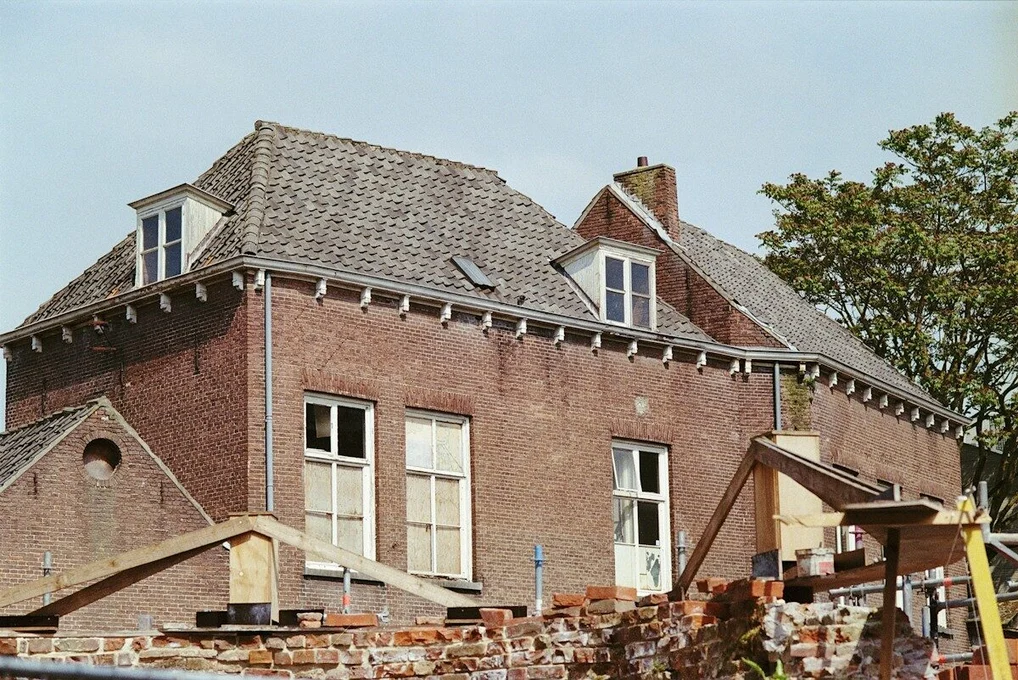
Krzysztof's house has 165 m² of heated floor area over two storeys, plus a basement. It was built in 1986. In 2010 the owners added 10 cm of polystyrene to the walls, the windows had been replaced before that, and the top-floor ceiling had about 15 cm of mineral wool. Heating came from a coal boiler in the basement feeding 1980s steel radiators, and the same boiler heated the hot water. The house burned through about 4 tonnes of coal a year.
He came to us with a question we hear a lot: does a heat pump make sense in a house like this at all, or does the whole system need replacing first?
Paweł Nowicki calculated the heat loss for each room separately, using the dimensions, the wall and roof build-ups, and the energy audit that was needed for the Czyste Powietrze application anyway. The result was about 8.5 kW at the design outdoor temperature. We chose a 10 kW heat pump so it has headroom for hot water and doesn't run at its limit all the time.
The radiators were the key question. At a 48°C flow temperature most of the existing ones gave out enough heat. Four were too small: in the living room, two upstairs bedrooms and the bathroom. We replaced those with larger ones and left the rest. Replacing every radiator would have added several thousand złoty without a noticeable difference.
We went with an R290 monobloc. The whole refrigerant circuit stays inside the outdoor unit, and only water goes into the house. R290 is propane, so the unit needs set distances from basement windows, drains and gratings. It went against the gable wall, away from the basement window.
The installation took four days in September 2025. Day one: removing the boiler and coal store. Day two: base and outdoor unit. Day three: plant room and radiators. Day four: flushing, commissioning and showing the client how the controller works.
The problem showed up during flushing. The system was almost 40 years old and full of sludge. The upstairs bathroom radiator only warmed at the top, even though it was new. A section of pipe inside the bathroom wall turned out to be almost completely blocked. We cut out part of the tiling, replaced about 2 m of pipe, chemically flushed the whole system and added a magnetic filter on the return. After the first month the filter was full. By the third it was nearly clean.
The 2025/26 season went without a breakdown. The heat pump, including hot water, used about 5,900 kWh of electricity. At an assumed PLN 1.10 per kWh that is around PLN 6,500. That is close to what the client used to spend on coal, and we say so openly. The difference is no fuel deliveries, no ash to carry out, no smoke from the chimney, and an even temperature day and night.
On the coldest January days the flow temperature ran at 45-47°C, below the calculated figure. The client has since moved to a two-rate tariff and we expect a lower bill next season, but we'll give a number after a full year.
I was worried a heat pump wouldn't cope in a house built in 1986. Paweł worked out the heat loss room by room and we only replaced four radiators, not all of them. We had 21 degrees all winter, and I don't order coal any more.
Gallery
Case studies
Private specialist outpatient clinic Distribution company, owner-occupied warehouse
 Accounting office, tenant