From coal to a heat pump: a 1978 house near Szamotuły after its first winter
A 1978 cube house, 140 m², an old coal boiler and a Czyste Powietrze grant. Our crew leader on how the switch went and how much electricity the heat pump used in its first winter.
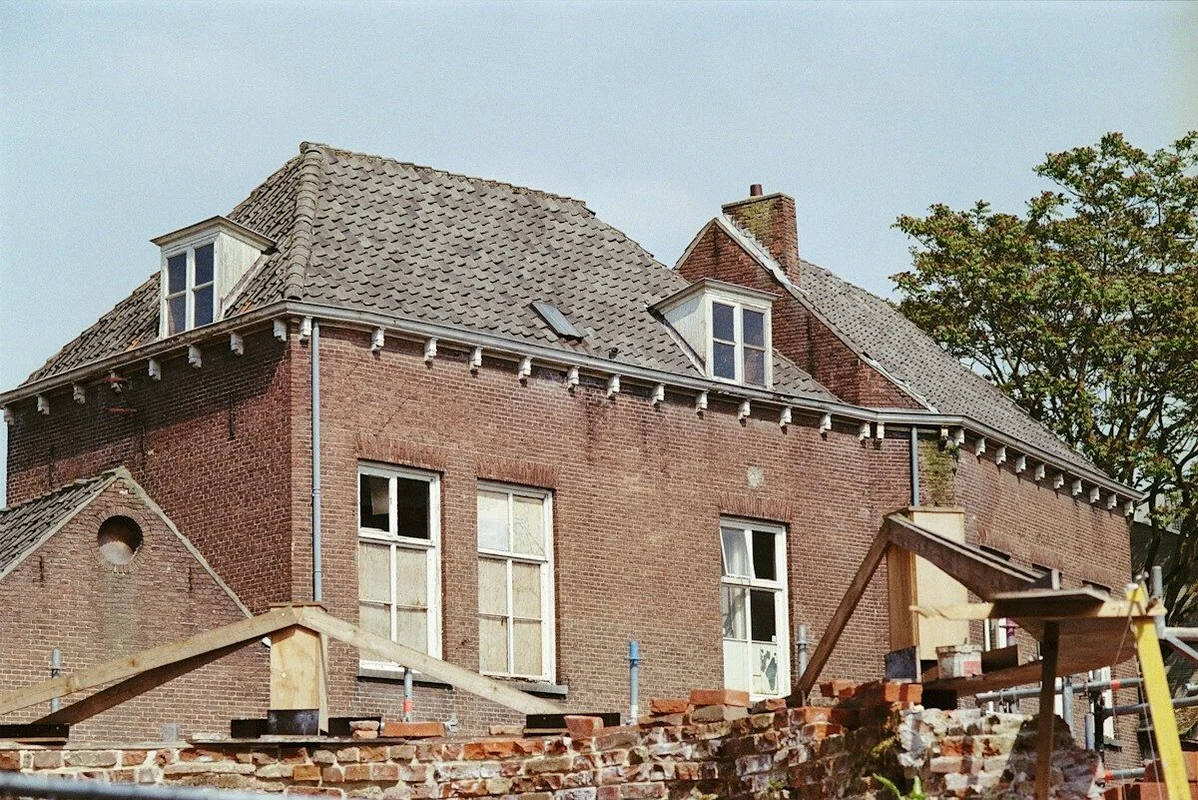
My name is Jakub Kaczmarek and I lead one of our heat pump installation crews. Most of our jobs in recent years have not been new builds. They are 1970s and 1980s "kostka" houses, the square two-storey blocks you see all over Poland, which have always had a coal boiler in the basement. This house near Szamotuły is typical of them, so I will go through it in some detail. First names are used with the owners' permission.
The house and the starting point
Andrzej and Beata live in a kostka built in 1978. Two floors, about 140 m² of heated space plus an unheated basement with a coal boiler from the 1990s. A few years ago they replaced the windows and insulated the walls with 12 cm of polystyrene. The ceiling under the unused loft was left as it was, with a thin layer of mineral wool.
According to the owners, the boiler burned 5-6 tonnes of coal a season. Andrzej went down to the basement twice a day, three times in a frost. The radiators were old cast iron ones plus a few steel panels, sized for water at 70-80°C.
Audit and grant
It started with an energy audit, which is mandatory under the Czyste Powietrze programme. The auditor put the house's heat demand at about 9.5 kW at an outdoor temperature of -16°C and, besides replacing the heat source, recommended insulating the loft ceiling. The owners qualified for the increased support level, up to 70% of eligible costs. Our Katarzyna Lis prepared the application with them and made sure the chosen heat pump was on the ZUM list of approved equipment.
The grant covered a large share of the heat pump, hot water tank, radiators and labour. The owners paid the rest from savings. They can claim that part under the thermal retrofit tax relief, but only the part the grant did not cover.
What we chose and why
Paweł Nowicki from our design team specified a 12 kW air-to-water monoblock heat pump using R290 refrigerant, with a 200 l hot water tank. With a demand of 9.5 kW, 12 kW may look generous, but nominal output is quoted for mild conditions. At -15°C and 45°C flow this unit delivers less, and we wanted it to cope with cold spells without leaning on the backup heater all the time.
We went for a monoblock because the whole refrigerant circuit is factory-sealed in the outdoor unit. Only water pipes come into the house, which keeps things simpler in an old building.
The most important decision was about radiators. A heat pump runs cheaper the lower the flow temperature. We worked out each room and found that in five of them, the living room, kitchen, bathroom and two north-facing rooms, the old radiators would not keep up at 45°C. We replaced them with larger steel radiators sized for low temperatures. The rest, including the cast iron ones in the bedrooms, stayed.
Three days on site
The installation took three working days:
- Day one: removing the coal boiler, preparing the base for the outdoor unit, drilling through the basement wall.
- Day two: setting the outdoor unit, the tank and the hydraulics in the basement, replacing five radiators.
- Day three: electrical connection, filling and bleeding the system, commissioning, setting the heating curve and showing the owners how to use the controller.
What came up along the way
Pipes in the floor. The old steel pipes to the kitchen and bathroom ran inside the concrete floor. During the pressure test the kitchen circuit would not hold pressure. Breaking up the floor was out of the question, so we ran new pipes along the basement ceiling and brought them up through the floor next to the wall. That added half a day, absorbed on day three.
Chimney. A few years earlier the owners had a quote for a chimney liner for a new coal boiler. A heat pump produces no flue gas, so no liner is needed. That cost simply disappeared.
Electrics. This was the biggest issue. The consumer unit was old, had no residual current devices and no room for new circuits. The electrician we work with replaced it before we arrived. The owners also applied to Enea, the local grid operator, for a higher connection capacity so the heat pump, backup heater and cooker could all run at once. Do this early. The process takes several weeks.
The first winter
We commissioned the heat pump in the second half of October 2025. At -15°C, which happened a few times in January, the flow temperature was about 45°C and the ground floor sat at 21°C. Upstairs it was 19-20°C, mainly because of the uninsulated loft ceiling. The backup heater came on for a few hours on the coldest nights.
The energy meter on the heat pump showed about 6,000 kWh from start-up to the end of April 2026, hot water included. Using the assumption of about PLN 1.1/kWh that we use in our worked examples, that comes to roughly PLN 6,600. The owners' actual bills came out a bit different: electricity prices were frozen until the end of 2025, and in January they switched to the G12 off-peak tariff, so part of the usage was billed at a lower rate. This is one house and one winter, not a promise for every kostka.
For comparison, 5-6 tonnes of coal a year had cost them about the same or more, depending on the price that season. So the owners did not make a fortune on the heating bill. What they gained was something else.
What the owners say
Beata: "For the first time in twenty years I didn't have to think about whether someone had fed the boiler. The basement is clean now, we've turned it into a laundry room."
Andrzej admits he spent the first few weeks in the app, checking consumption every few hours. "I got a fright the first frosty morning when steam started coming off the outdoor unit. Jakub explained it was the defrost cycle and that it's supposed to do that."
What we would do differently
If the order were up to us alone, we would insulate the loft ceiling first and size the heat pump after. The owners plan to do it this year. Once it is done, the upstairs should be warmer and the heat pump can run at an even lower flow temperature. With their budget and the programme deadlines, though, it made more sense not to wait through another season on coal.