Annual heat pump and AC service: what happens during the visit
The checks a technician carries out during an annual heat pump or air conditioning service, and what manufacturer warranties and F-gas rules expect of you.
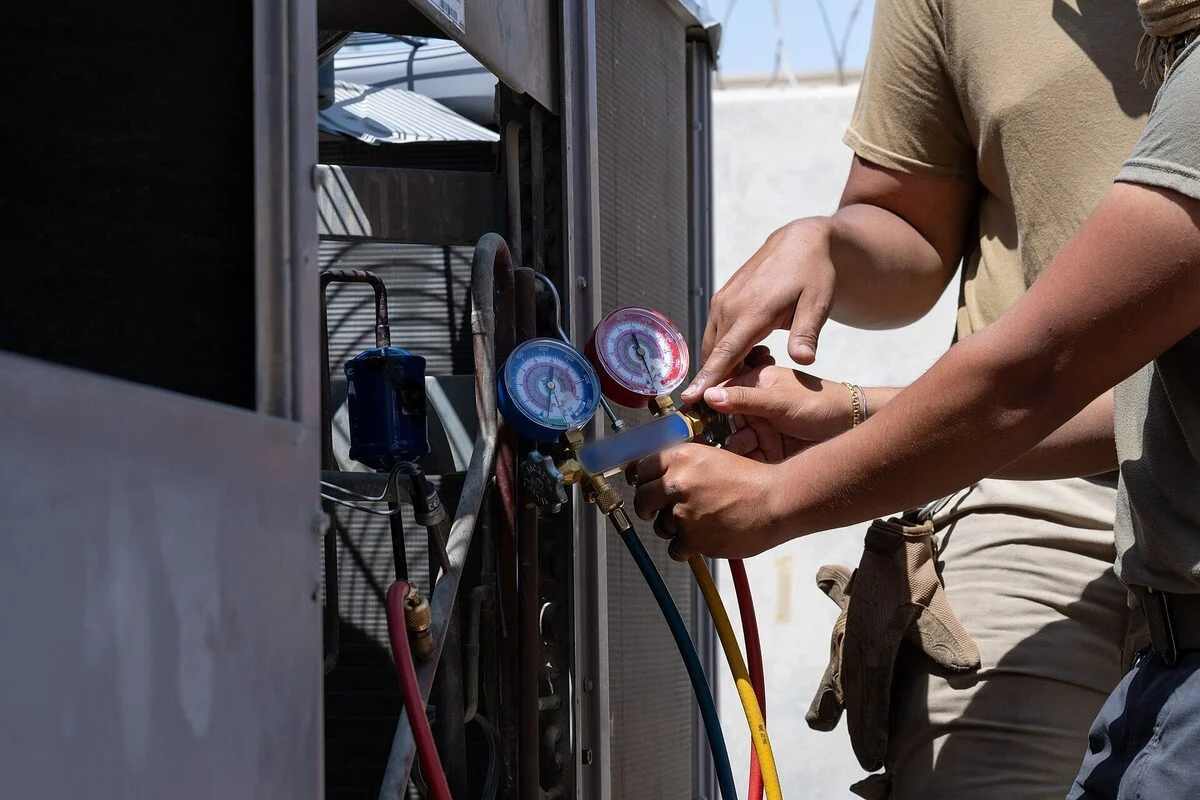
We carry out about 3,400 service visits a year. The question we hear most often when booking one is: "Do I really need this if everything works?" Short answer: yes, for three reasons. The manufacturer's warranty usually requires it, some units are subject to mandatory checks by law, and a small fault caught in May does not turn into a breakdown in January.
Below I go through what we actually do during a service, what it costs and what to look for in your paperwork.
Why we service in spring
A heat pump is best checked after the heating season, an air conditioner before the hot weather. May and June cover both. If your heat pump also cools the house in summer, one visit deals with everything. Spring is also when we have free slots. From mid-October the service calendar fills up several weeks ahead.
What we check: the list
The scope depends on the unit, but the basic list for an air-to-water heat pump and a split air conditioner looks like this:
Indoor unit and pipework
- Cleaning or replacing filters: air filters in an air conditioner, the mesh strainer or dirt separator on the return pipe of a heat pump system.
- Checking pressure in the heating circuit and the condition of the expansion vessel.
- Bleeding air from the system if any has collected.
- Checking the condensate drain: clear, properly sloped, trap in place. A blocked drain is the most common reason for water dripping under an air conditioner.
- Disinfecting the coil and drip tray in the AC indoor unit.
Outdoor unit
- Washing the coil fins. Dust, pollen and leaves reduce heat transfer, so the unit uses more electricity for the same output.
- Checking the fan, fixings, base and the drain from the condensate tray. In winter a frozen drain can stop the defrost cycle from working.
- Inspecting pipe insulation and wall penetrations.
Electrics and controls
- Tightening and inspecting electrical connections, breakers and supply cables. A loose terminal can run hot for years before something fails.
- Reading the fault history from the controller and comparing operating data with last year.
- Checking settings: heating curve, schedules, the anti-legionella cycle for hot water.
Refrigerant circuit
- Measuring operating pressures and temperatures, assessing superheat and subcooling.
- Inspecting joints and valves for oil traces, which give away a leak.
- Leak testing with a detector where F-gas rules or the warranty require it.
At the end we log the visit in the unit's service book and leave a report with the readings.
F-gas, leak checks and the register
EU Regulation 2024/573 on fluorinated greenhouse gases replaced the earlier rules in 2024. Whether a unit needs regular leak checks depends on the amount of refrigerant measured in tonnes of CO2 equivalent, not in kilograms. A typical wall-mounted air conditioner in a flat often falls below the threshold. Larger heat pumps and multi-split systems can exceed it. In that case the owner must have the unit checked at set intervals, and the unit gets a record in Poland's Central Register of Operators (CRO).
We do not list thresholds and intervals for every case here, because they depend on the refrigerant, its quantity and how the system is built. On the first visit we read the nameplate and tell you plainly whether your unit falls under the rules. If it does, we keep its CRO record.
Heat pumps using R290 (propane) contain no F-gases, so these obligations do not apply. We still check the refrigerant circuit, and R290 adds safety rules for working with a flammable refrigerant, which our technicians are separately trained in.
Work on equipment containing F-gases may only be done by people holding a personnel certificate, employed by a company holding a company certificate. Both are issued by UDT-CERT. Bielak & Sowa holds the company certificate and every one of our service technicians holds a personal one. Ask any firm that is about to open a refrigerant circuit in your home for the same.
Warranty: read the terms
Most heat pump and air conditioner manufacturers make the warranty conditional on an annual service by an authorised installer. Many also set a time window, for example within 12 months of commissioning or the previous visit. Miss it, and if the compressor fails the manufacturer may refuse a warranty repair. That is a bill running into thousands of złoty.
Check three things on your warranty card: who may carry out the service, how often, and where it has to be recorded. Some manufacturers also want the visit entered in their online system. We do that for you.
What a service costs
The price depends on the unit and the travel distance. As a guide, a service for a heat pump or a single air conditioner usually costs PLN 350-700 including VAT. Things that push it towards the upper end include a mandatory leak check with a CRO entry, several indoor units, awkward access to the outdoor unit or a longer drive. Consumables such as new filters are charged separately. We give you the exact figure when we book the visit.
If you have a heat pump, a heat recovery unit and an air conditioner, it pays to have them all done on the same day. One visit, one travel charge.
Service contract
For clients who would rather not track dates themselves we offer a service contract. Under the contract:
- we remind you when the service is due and propose a date,
- in the heating season we respond within 48 hours, and usually the same day if you have no heating,
- from October to April you get emergency cover, daily 7:00-21:00,
- we keep all the paperwork: service book, warranty entries and the CRO record where one is required.
The price depends on the number of units. Our service department can give you details on +48 000 000 001 or at serwis@example.com.
What you can do yourself between visits
Some things do not need a technician: rinsing the AC filters every few weeks during the season, clearing leaves and snow from around the outdoor unit, glancing at the pressure gauge on the heating system now and then. Do not open the outdoor unit casing, though, and do not try to "top up" anything. The refrigerant circuit is a job for someone certified to work on it.